Apple 1984: The Commercial That Only Aired Once and Changed Everything
January 22, 1984. Super Bowl XVIII. The Los Angeles Raiders were leading the Washington Redskins in the third quarter when a 60-second commercial aired that would be analyzed, debated, and referenced for the next four decades. It was called “1984.” It aired nationally exactly once. And it changed what advertising could be.
Apple’s “1984” commercial, conceived by Steve Hayden and Brent Thomas at Chiat/Day and directed by Ridley Scott — fresh off Blade Runner — is universally regarded as the greatest Super Bowl advertisement ever made and one of the most important commercial films in history. It didn’t show a product. It barely mentioned a product name. What it showed was a vision of the future, a declaration of war, and an artistic achievement that most feature films can’t match.
The Context
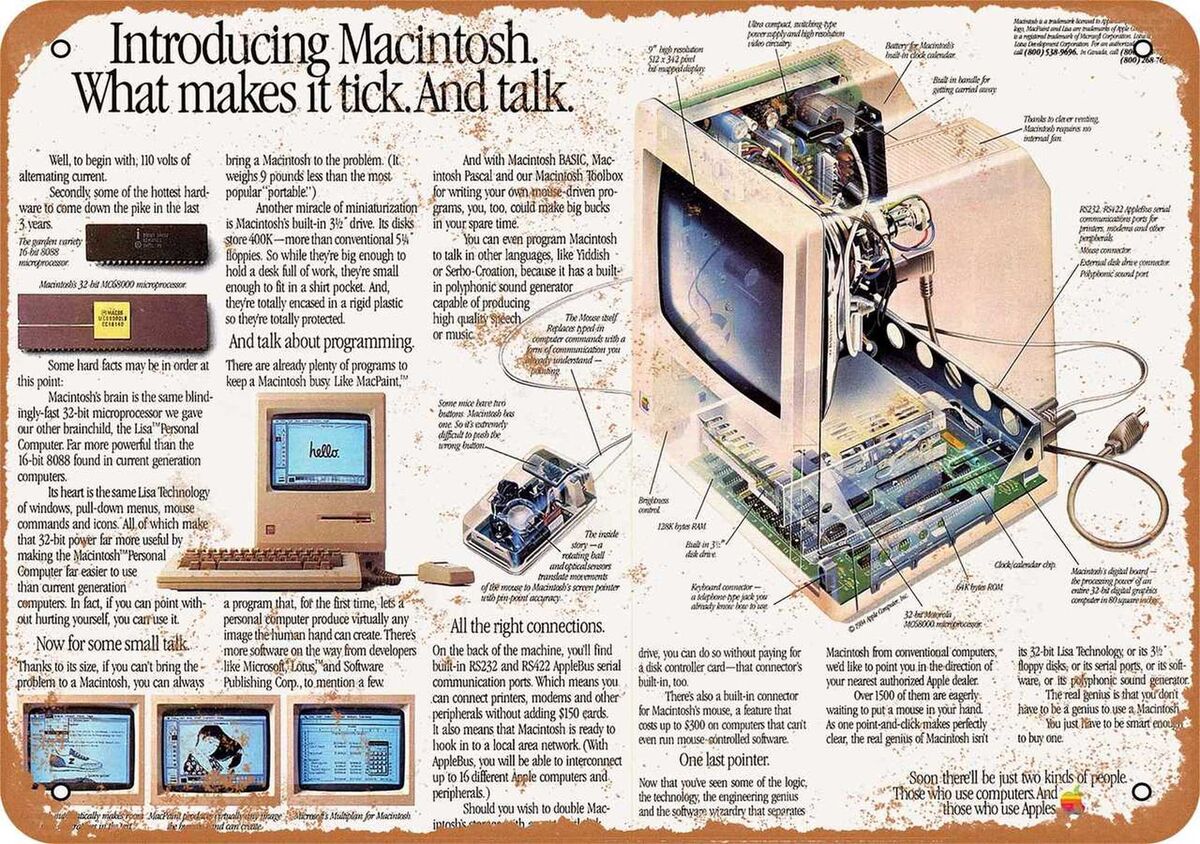
By late 1983, Apple was preparing to launch the Macintosh — the first personal computer with a graphical user interface designed for mass consumers. IBM had entered the personal computer market in 1981 and was rapidly dominating it, and Apple’s position was precarious. The Macintosh needed to make an immediate, massive cultural impact to have any chance.
The brief to Chiat/Day was essentially: introduce the Macintosh to the world. What came back was something no client had ever been asked to approve before.
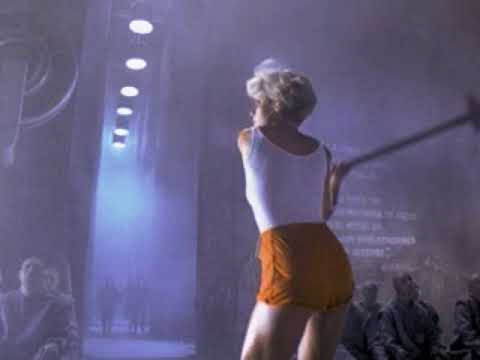
The concept, drawn from George Orwell’s novel Nineteen Eighty-Four, depicted a dystopian grey world in which drone-like humans in identical clothes march in formation and receive their instructions from a giant screen showing a totalitarian leader — “Big Brother.” A lone woman in bright athletic clothing runs through the grey landscape carrying a hammer. She hurls it at the screen. The screen explodes. Light floods the room. And a voiceover announces: “On January 24th, Apple Computer will introduce Macintosh. And you’ll see why 1984 won’t be like 1984.”
The allegory was blunt: IBM was Big Brother, the conformist monolith of corporate computing. Apple — represented by the hammer-wielding athlete — was freedom, individuality, and the future.
Ridley Scott’s Vision
Ridley Scott was hired to direct the film with a budget that was, by 1983 standards, staggering. The commercial cost approximately $900,000 to produce — the equivalent of roughly $2.7 million today — with additional millions spent on the Super Bowl media buy.
Scott assembled a cast of 200 extras to play the drone-like masses, many of them genuine skinheads recruited from Britain. The production was filmed over three days at Shepperton Studios in England. The visual language — the grey industrial aesthetic, the precise choreography of the marching crowd, the sudden explosion of color and light — was cinematic in a way that television advertising had never attempted.
The single female athlete was portrayed by Anya Major, a British hammer discus thrower and actress. Her casting was deliberate: she needed to be physically capable of actually throwing a large hammer, and she needed to project the quality of defiant, unstoppable energy that the commercial demanded.
The Internal Battle
Chiat/Day’s Steve Jobs and Steve Wozniak had approved the concept. Apple’s board of directors had not. When they saw a rough cut, the board’s reaction was reportedly one of horror. John Sculley, Apple’s CEO, wanted to sell back the Super Bowl time slot. The company had paid $800,000 for a 60-second placement and was seriously considering not using it.
Chiat/Day’s co-founder Jay Chiat had other ideas. He sold only part of the time back to the network, ensuring that enough of the buy remained to air the commercial. The rest, as they say, is advertising history.
The Response
The commercial aired once — once — during Super Bowl XVIII, and was mentioned the following morning in over 5 minutes of news coverage across all three major television networks. By some estimates, the earned media value of that coverage was worth more than 50 times the cost of the original media buy.
The reaction was split between those who were moved and those who were confused. But the critical consensus in the advertising industry was immediate: something unprecedented had happened. “1984” was not just a commercial. It was a film. It had a visual grammar, a narrative structure, and an emotional arc that belonged to cinema rather than television advertising.
That year, Chiat/Day swept the advertising awards season. The commercial was inducted into the Clio Hall of Fame. Advertising Age named it the best commercial of the decade, then the best commercial of the century.
The Legacy
What “1984” established was the possibility — and the commercial viability — of treating a product launch as a cultural event. Apple did not simply advertise the Macintosh. They announced a revolution. And they did it in the most expensive, audacious, cinematically serious way possible.
The commercial set the template for virtually every major product launch in technology advertising that followed. The idea that a tech company could position itself not just as a vendor but as a force for human liberation — against conformity, against corporate power, for the individual — runs directly from this film through two generations of Apple advertising and into the broader culture of Silicon Valley self-mythology.
Of course, a piece of advertising this iconic eventually attracts its own parodies and tributes. See Goodbye 1984: Making Fun of Apple on this site for a look at how the ad’s legacy has been riffed on since.
Client: Apple Computer Agency: Chiat/Day Creative Directors: Steve Hayden, Brent Thomas Director: Ridley Scott Year: 1984
For more on the commercial’s production and legacy, see the Wikipedia entry on Apple’s “1984” advertisement.