Burger King's Moldy Whopper: The Most Disgusting Ad Ever Made That Won Everything
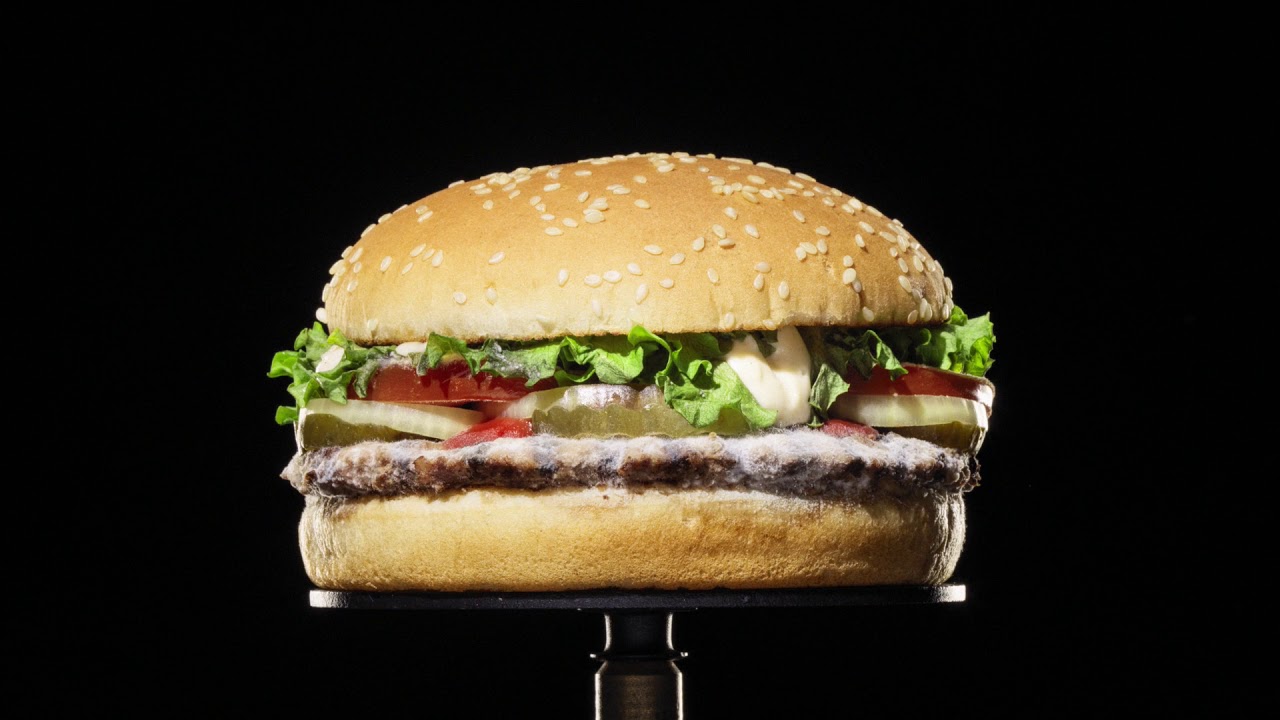
On February 19, 2020, Burger King released what many considered the most revolting advertisement ever produced by a major fast food brand. “The Moldy Whopper” showed a real Burger King Whopper decaying over 34 days — timelapse footage of a burger growing blue-green mold, going soft, collapsing, becoming genuinely and viscerally disgusting — set to “What the World Needs Now Is Love” by Lena Horne.
It won the Grand Prix at Cannes Lions. It won the Grand Prix at the One Show. It was named the most awarded campaign of 2020 by The Gunn Report. And it effectively communicated a product claim — that Burger King had removed artificial preservatives from its Whoppers — more memorably than any conventional food advertising could have.
The Context
Over the three years preceding the campaign, Burger King had been systematically removing artificial preservatives, flavors, and colors from its menu items globally. By early 2020, they had eliminated 8,500 tons of artificial preservatives from food served in restaurants across dozens of countries. The Whopper — the brand’s flagship burger and most recognizable product — had been reformulated to contain no artificial additives.
This was a genuine, meaningful product change. The challenge was communicating it in a way that would be believed and remembered. Fast food brands had been making natural and clean-label claims for years, and consumer skepticism was high. A conventional campaign showing fresh ingredients or a clean kitchen would have been dismissed.
The creative teams at INGO (Sweden), DAVID Miami, and Publicis Bucharest — three agencies from three different countries collaborating on a single campaign — approached the brief from the opposite direction. Instead of showing how beautiful and natural the food was, they would show what happened when it was left alone without artificial preservatives. They would show the mold.
The Production
The film required a technically demanding shoot. A real Burger King Whopper — made without artificial preservatives — was purchased and placed under controlled timelapse cameras. Over 34 days, the sandwich was filmed continuously as it underwent natural decomposition. The bun became spotted with blue and green mold. The vegetables softened and collapsed. The patty darkened. By the end of the 34 days, the burger was a genuinely alarming object.
The timelapse footage was shot with the same technical precision as nature documentary photography, with careful attention to lighting that made the decay both visible and, in a strange way, beautiful. The choice of “What the World Needs Now Is Love” — a warm, hopeful, idealistic song — as the soundtrack was deliberately counterintuitive and gave the film its unsettling, darkly comic tone.
The closing line was simple and devastating: “The beauty of real food is that it gets ugly.” Below it: “No artificial preservatives. Coming to all restaurants by the end of 2020.”
The Audience’s Divided Response
Public reaction was, as intended, divided. Some people found the commercial genuinely nauseating and said so loudly. Others were impressed by the audacity. Consumer research conducted in the aftermath showed that while the ad was polarizing in terms of its visual content, the core message — Burger King food is now free of artificial preservatives — landed with unusual clarity and credibility.
This is the paradox at the heart of the campaign: the best possible way to prove that food has no artificial preservatives is to show it decaying naturally. A burger that molds is a burger without the chemicals that prevent molding. The disgust response, rather than undermining the message, actually confirmed it. The audience’s revulsion was the proof.
Why the Industry Celebrated It
“The Moldy Whopper” won essentially everything an advertising campaign can win because it demonstrated several qualities that the industry prizes: genuine creative courage, a clear and non-obvious insight, perfect alignment between the creative idea and the product claim, and the willingness to sacrifice conventional beauty standards in service of truth.
Fast food advertising had been one of the most formulaic categories in advertising for decades — slow-motion close-ups of gleaming food, happy faces, bright colors, perfected product shots. “The Moldy Whopper” was the antithesis of all of that, which is precisely what made it impossible to ignore.
Fernando Machado, then Burger King’s Global Chief Marketing Officer, had spent years building a creative culture at the brand that was willing to take significant risks. “The Moldy Whopper” was the culmination of that culture — a campaign that only a brand with genuine creative confidence could have made.
The Legacy
The campaign influenced how the food and beverage industry approached clean-label and natural ingredient claims for years afterward. It demonstrated that consumer skepticism about brand claims could be overcome not by assertion but by evidence — and that advertising could deliver evidence in a way that was more memorable and credible than any product label or press release. It’s a similar bet to the one Cadbury made with its Gorilla ad: trust that audiences will reward a brand willing to risk discomfort over playing it safe.
Client: Burger King Agencies: INGO (Stockholm), DAVID Miami, Publicis Bucharest Global CMO: Fernando Machado Year: 2020
For more on the campaign’s background and reception, see the Wikipedia entry on the Whopper.