Dove 'The Game Is Ours': A Super Bowl Ad About Girls in Sport
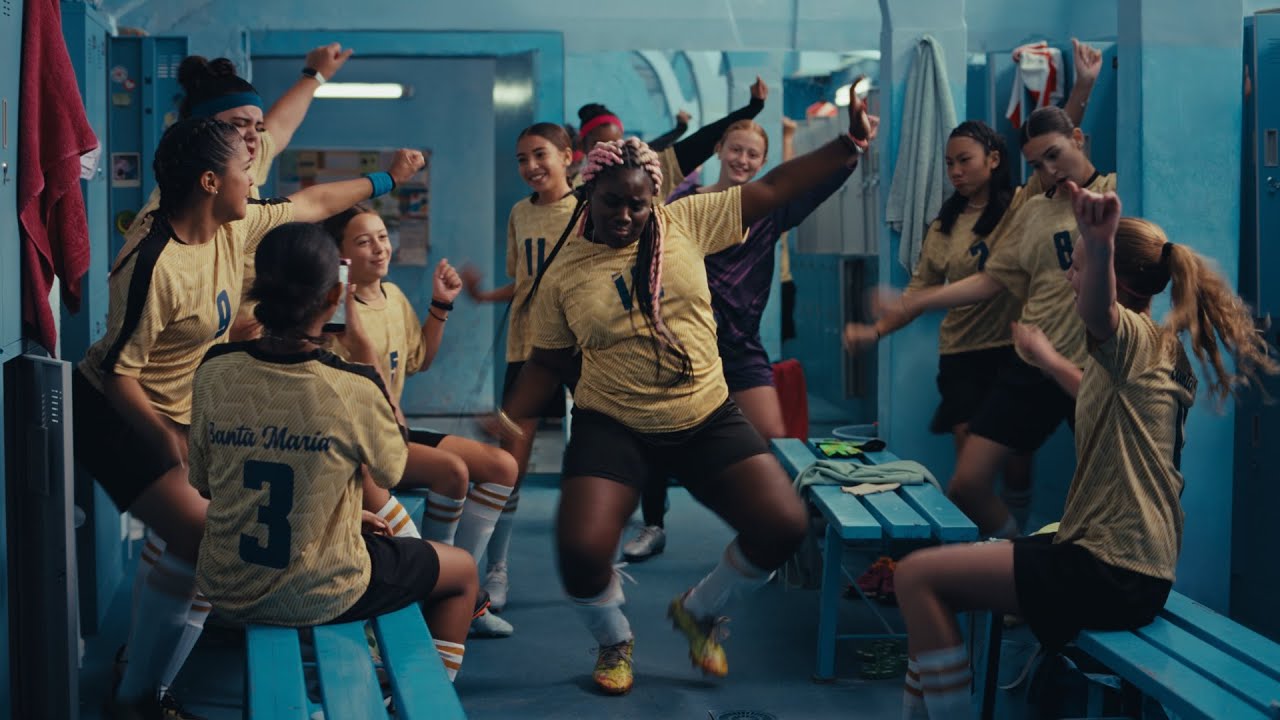
The stat Dove leads with is real and it is damaging: by age 14, girls drop out of sport at twice the rate of boys. The reasons are well-documented — body image pressure, social comparison, a culture that critiques how female athletes look as readily as how they perform. “The Game Is Ours,” Dove’s Super Bowl LX entry created by Ogilvy and directed by Savanah Leaf, takes that fact and tries to turn it into a film worth running during the biggest advertising slot of the year.
The Argument
Dove has been building a case around body image and self-esteem in advertising since the “Real Beauty” campaign launched in 2004. Two decades on, the brand is still in the same conversation, which raises an obvious question: has the world moved, or has Dove been running in place?
“The Game Is Ours” doesn’t pretend the problem is solved. It lands its claim — that girls are leaving sport because of the pressure they feel about how they look — and asks directly what it would mean to stay. The film is not a celebration. It is an intervention, or something aspiring to look like one.
That is a more honest position than most purpose-driven advertising takes. There is no before-and-after, no triumph, no resolution. The film ends with girls playing. Not winning. Playing.
What Savanah Leaf Does
Savanah Leaf — director of “Earth Mama,” a film about the American foster care system — brings a documentary sensibility that purpose advertising desperately needs and rarely gets. The girls in “The Game Is Ours” do not look like they are performing sincerity. They look like they are doing a thing, and a camera happened to find them.
This is extraordinarily difficult to fake and almost always the difference between cause-marketing that moves people and cause-marketing that makes people reach for their phones. The editing rhythm is loose enough to feel unscripted. The faces are specific. The moments caught are the unglamorous ones — a missed shot, a moment of self-consciousness, the instant before someone decides whether to care what anyone thinks.
Leaf’s direction doesn’t underline the emotional beats. It just lets them exist.
The Super Bowl Context
Running this message during Super Bowl LX is a deliberate provocation. The Super Bowl’s advertising culture has historically been built around spectacle, celebrity, and humor — the precise opposite of what “The Game Is Ours” offers. Dove is betting that a quiet film about a real problem will land harder inside that context than it would anywhere else, precisely because of the contrast.
The bet has precedent. Chrysler’s “Imported from Detroit” and Always’s “Like a Girl” both demonstrated that emotional gravity during a comedy-heavy commercial break can function like a pattern interrupt — the tonal shift itself creates attention. Whether “The Game Is Ours” achieves that depends partly on where it lands in the broadcast, and partly on whether viewers bring enough goodwill to Dove’s track record to receive the message without skepticism.
Ogilvy’s Execution
Ogilvy built the brief around what Dove calls the “Body Confident Sport” program — a body confidence curriculum the brand developed with sports organizations to specifically address the dropout rate. The campaign is, in that sense, anchored to something real: not just a position, but an intervention that exists in the world.
That anchoring matters more than it might appear. Purpose advertising that points to a specific program invites scrutiny — people can check whether the program exists and whether it works. It also, when the program is genuine, gives the campaign a credibility that purely values-based advertising cannot manufacture.
Dove’s program is genuine. That isn’t nothing.
What It Gets Right
“The Game Is Ours” gets the most important thing right, which is that it does not pretend the problem is the brand’s fault or the brand’s solution. Dove sells soap. It is not going to solve the cultural pressure girls feel about their bodies. What it can do — and what this campaign does — is name the problem clearly and point at something being done about it.
The restraint in the film’s emotional palette is also right. There is temptation, in Super Bowl advertising in particular, to over-engineer the sentiment — to push toward the tearjerker moment, to make the music swell exactly when the voiceover drops its weight. Leaf and Ogilvy resist that almost entirely. The film earns its emotion by not reaching for it.
The Broader Campaign
“The Game Is Ours” is the hero film for a broader campaign that includes social content, a partnership with youth sports organizations, and an extension of the Body Confident Sport program into new markets. The Super Bowl spot functions as a public declaration; the work around it is where the actual change, if any, will happen.
That division — the advertising as declaration, the program as action — is a more honest model than most brands manage, and one that Dove’s two-decade history in this space makes credible in a way that a newer brand attempting the same campaign could not.
Client: Dove (Unilever) Agency: Ogilvy Director: Savanah Leaf Year: 2026